Why work doesn't happen at work - Some perspectives on remote work

Here are some ideas I found interesting in three talks about remote work.
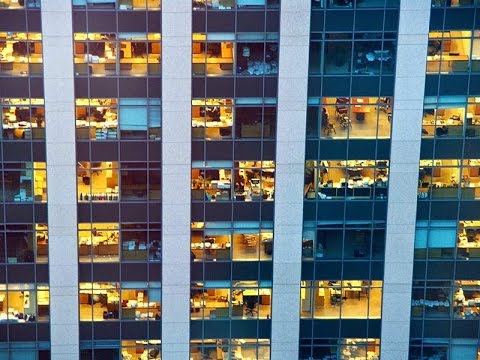 Why work doesn't happen at work | Jason Fried
Why is it that people can't seem to get work done at work?
Companies typically decide that people have to come together to this one place, called "an office" filled with lots of different equipment, to do work. But if you ask people the question, "Where do you go when you really need to get something done?", typically you get three kinds of answers:
- A place, location, room, for example, the basement, the extra room in the house, the coffee shop, the library, etc.
- A commute, for example, the train, on the plane, in the car, etc.
- A time for example early in the morning, late at night, on the weekends etc
You rarely hear someone saying "the office", but companies are spending lots of money on "the office" and making people go to it all the time yet people don't do their best work there.
One idea is that there are too many distractions at the office and it's hard to get sustained periods of uninterrupted work. Your day ends up shredded into small work moments instead of a work day. However, creative people like designers, programmers, writers, engineers, thinkers, etc, generally need long stretches of uninterrupted time to get things done. So short 15 to 30 minute bursts of work (in between interruptions) in the office don't allow for people to really get creative and really think about a problem. It's just enough for some quick ideas. While the workday is generally 8 hours, few people get even 2 hours of uninterrupted time to themselves in the office
This is why when people want to get creative, they do work at home, or they go to the office really early or really late in the day or on the weekends when no one is around or when there's fewer people and hence fewer distractions.
Jason Fried also argues that sleep and work are closely related in that they are both phase/stage-based events and in order to get to the really deep and later stages you need to go through the early ones. If you're disrupted along the process, you often need to restart at the earlier stages. We don't expect people to sleep well if they're interrupted all night and in the same way we shouldn't expect people to work well when they're interrupted all day.
Managers typical say things like, "I don't want people to work at home because there are lots of distractions", or, "If I can't see the person then how do I know they're working". However, distractions at home, on the train or on the weekend are all voluntary, you need to make the decision to leave what you're doing and watch the TV or whatever yet distractions in the office are typically not up to you.
So what can managers do to make the office a better place to work? Jason Fried's suggestions are to:
- Have no talk Thursdays, once a month. Even if it's just no talk afternoon of that one Thursday. He argues that getting someone 4 hours of uninterrupted time is the best gift you can give someone in the office. And as you realize the usefulness you could increase it to once a week or more.
- Find as many opportunities to replace synchronous/active communication and collaboration like face-to-face, tapping someone on the shoulder, having meetings etc, with more asynchronous/passive communication and collaboration like using things like email, instant messaging, collaboration products, etc which allow people to be interrupted on their own schedule. It's up to you to choose when you want to check that message on skype.
An interesting perspective is that it's not enough to have people who are good at working remote. It can only work if you also have a manager who knows how to manage remote workers effectively
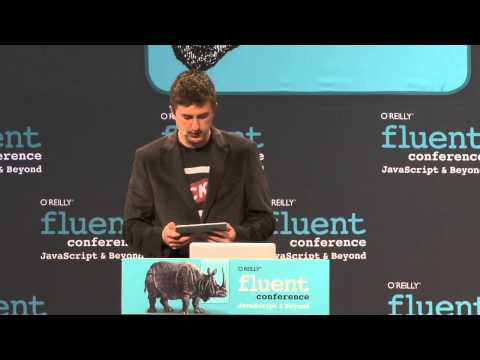 Fluent 2013: Mike Hostetler, "Remote Working Works!"
According to Mike Hostetler, the word work is often used to refer to three different things:
- The task that needs to be completed, Someone can say, "I have done the work", referring to the task they needed to perform.
- The location where tasks are performed. Someone might say, "I'm going to work", referring to travelling to the location where they perform the tasks.
- The level of effort needed to complete the task. Someone could say, "This is quite some work", referring to the fact that a lot of effort will be needed.
Why is this important? In a typical job environment, these are typically prioritized as location first then task then effort. If managers could learn to change this prioritization and focus on the task first rather than the location then tasks would be designed to reduce the requirement for them to be tied to a specific location and more none location-based management strategies would evolve. This would open up a range of possibilities and the concept of remote working easier. Without a manager who's good at this, remote working won't be as efficient as it can be.
Possibly the best part about this is that managers aren't inherently good at managing remote workers (maybe some are) but this is a skill that they can learn as they shift their perspective from viewing work as inherently tight to a location to viewing it as task first.
David Copeland gives some interesting tips for improving remote work that I think is certainly worth considering. Check it out on the link below.
The Effective Remote Developer
Do you relate with any of this? Do you agree with the perspectives? What are your thoughts on the ideas? Let's have a discussion in the comments.
Comments
Join the discussionNo comments yet. Be the first to comment.


